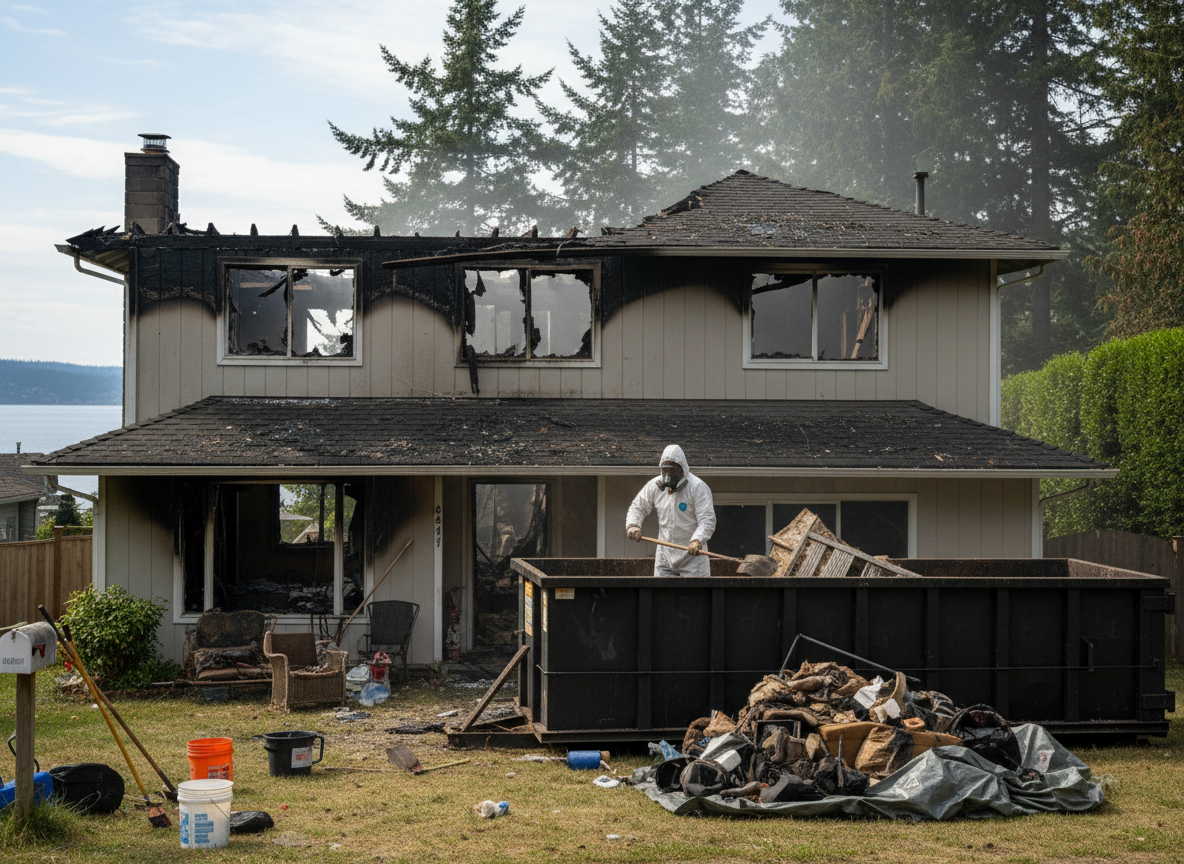
Seahurst homes built before the 1980s often feature lath-and-plaster walls and older HVAC systems that trap smoke particles deep in cavities after a tenant-caused kitchen fire. Cleanup starts with negative-air containment to prevent cross-contamination into adjacent units, followed by HEPA vacuuming of all porous surfaces and soda-blasting of concrete foundations common in the area. Residue from burning synthetic materials in rental furnishings can etch glass and discolor vinyl flooring, requiring multiple passes with pH-neutral cleaners before any repainting.
King County building codes require documentation of all affected materials when a fire impacts shared walls in Seahurst duplexes or triplexes. Technicians test for hidden moisture behind cabinets and under subfloors because winter rains can combine with fire-suppression water to create hidden mold risks. Odor removal uses thermal fogging calibrated for the tight floor plans typical of Ambaum Boulevard properties, ensuring smoke smell does not return when tenants reopen windows.
Landlord-tenant coordination is essential in Seahurst because many rentals fall under Burien or Seattle jurisdiction rules that limit how long a unit can remain uninhabitable. Crews photograph every step and separate salvageable tenant belongings from structural items so insurance adjusters receive clear line-item reports. Final clearance testing confirms airborne particulates meet residential standards before new occupants move in.
Technician insight
In Seahurst the thing that catches most people out with tenant fire damage cleanup is how quickly smoke travels through the shared attic spaces of 1960s-70s homes along Ambaum Blvd SW; one kitchen fire can deposit residue in three units if you do not seal the ceiling cavities first.
Kitchen Fire in Seahurst Rental
A tenant left a pan unattended on an electric stove, sending smoke through the single-story home and into the crawlspace. Crews found heavy soot on lath-and-plaster ceilings and inside the original metal ductwork. They contained the unit, cleaned all surfaces, and treated the ducts before clearing the property for re-rental.
How it works
- 1
Initial Assessment
Technicians arrive within hours, document visible soot and smoke migration through Seahurst home layouts, and note any water from suppression efforts.
- 2
Containment And Removal
Negative pressure zones isolate affected rooms while HEPA equipment extracts particles from walls, ceilings, and HVAC registers common in local rentals.
- 3
Deep Cleaning And Odor Treatment
Porous surfaces receive multiple cleaning cycles, followed by thermal fogging to neutralize smoke odor embedded in older plaster and insulation.
- 4
Final Clearance
Air quality testing and walkthrough with property management confirm the unit meets habitability standards before tenant re-entry.
Pricing
Cost depends on square footage affected and whether HVAC or multiple rooms require treatment; upfront quotes provided after on-site inspection.