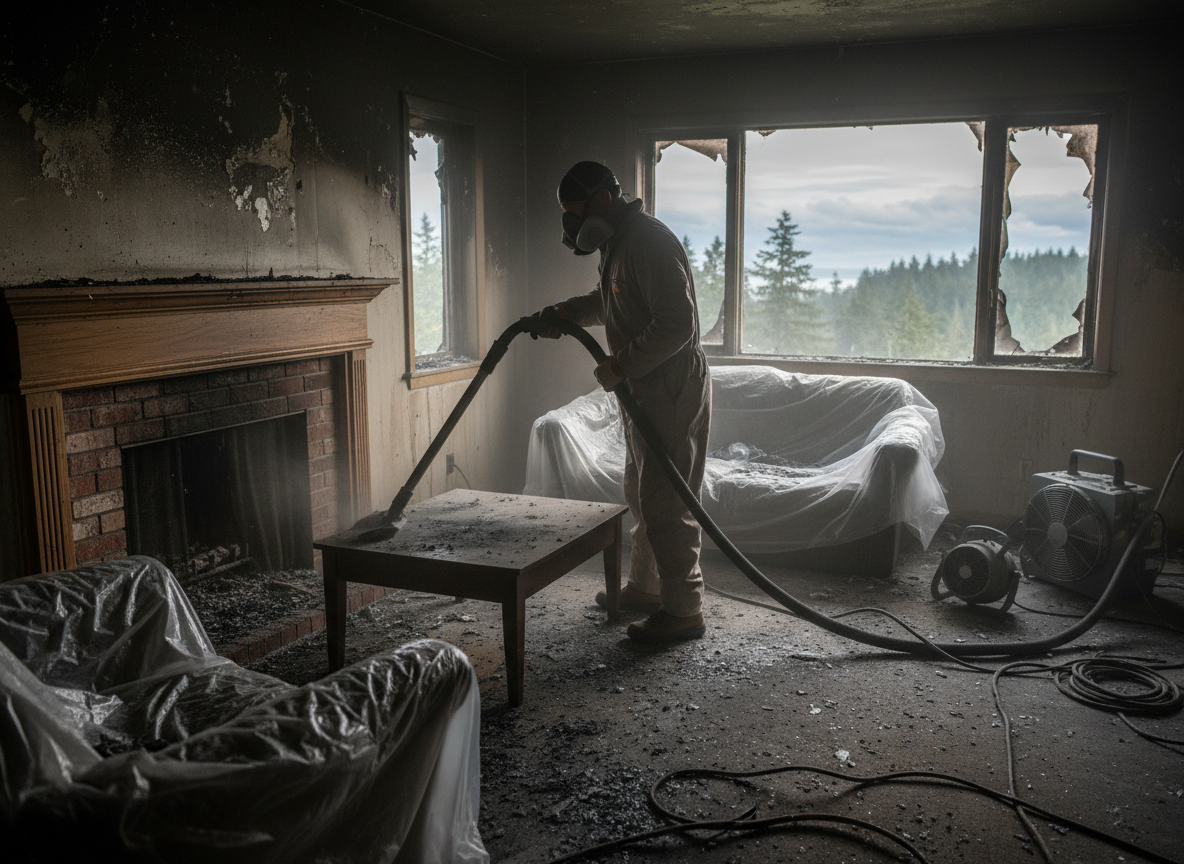
Seahurst homes built from the 1950s through the 1970s often feature cedar siding, popcorn ceilings, and forced-air systems that trap fine soot particles after even a small kitchen or electrical fire. Once winter temperatures drop and the marine layer settles over King County, that soot absorbs moisture and sets into porous materials like drywall and insulation, making removal far more difficult than in drier climates. Technicians must use HEPA filtration and negative air machines from the first hour to prevent redistribution through the single-story rambler layouts common along Ambaum Boulevard and nearby streets.
Edge cases frequently arise when fire damage occurs near the bluff overlooking Puget Sound. Salt air combined with smoke creates a corrosive residue on metal fixtures and wiring that standard alkaline cleaners cannot fully neutralize. In these situations crews test pH levels on surfaces before sealing and often replace copper piping sections rather than risk future corrosion. Homeowners who attempt DIY wiping spread the acidic residue into carpet padding and subfloors, requiring additional demolition later.
King County permitting requirements for post-fire reconstruction mean any structural member exposed to heat must be evaluated before new finishes are installed. Crews document char depth and coordinate with the local building department so repairs pass inspection the first time. Delaying professional clean up also risks secondary mold growth once the frequent Seahurst drizzle begins, because wet soot creates an ideal environment inside wall cavities.
Technician insight
In Seahurst, the thing that catches most people out with Fire damage clean up is how the constant damp air along Ambaum Blvd and older cedar-shake homes lets soot absorb moisture overnight and bond to drywall and insulation, turning a one-day job into full-room demolition if crews do not start drying and cleaning within the first few hours.
Electrical Fire in Seahurst Rambler
A homeowner near 152nd Street called after an outlet fire sent smoke through the living room and into the attic. We discovered soot had traveled through the original 1960s ductwork and settled in the fiberglass insulation. After containing the space and removing the contaminated insulation, we cleaned all surfaces and HVAC components, then verified clearance so the owner could begin permitted repairs without further delays.
How it works
- 1
Initial Assessment
Technicians arrive within hours, document all affected rooms, test air quality, and identify hidden smoke paths through HVAC ducts and attics common in Seahurst homes.
- 2
Containment and Safety
Plastic barriers and negative air pressure isolate the work zone to prevent soot migration into unaffected living spaces while crews remove hazardous debris.
- 3
Soot and Residue Removal
HEPA vacuums, specialized sponges, and pH-balanced cleaners lift soot from walls, ceilings, and contents without driving particles deeper into materials.
- 4
Odor Neutralization and Drying
Ozone or hydroxyl generators combined with dehumidification eliminate smoke odors and prevent moisture-related issues in the damp Pacific Northwest climate.
- 5
Final Clearance
Post-cleaning verification includes surface testing and walkthrough with the homeowner before any reconstruction begins.
Pricing
Pricing determined by inspection; upfront quotes provided before work begins.