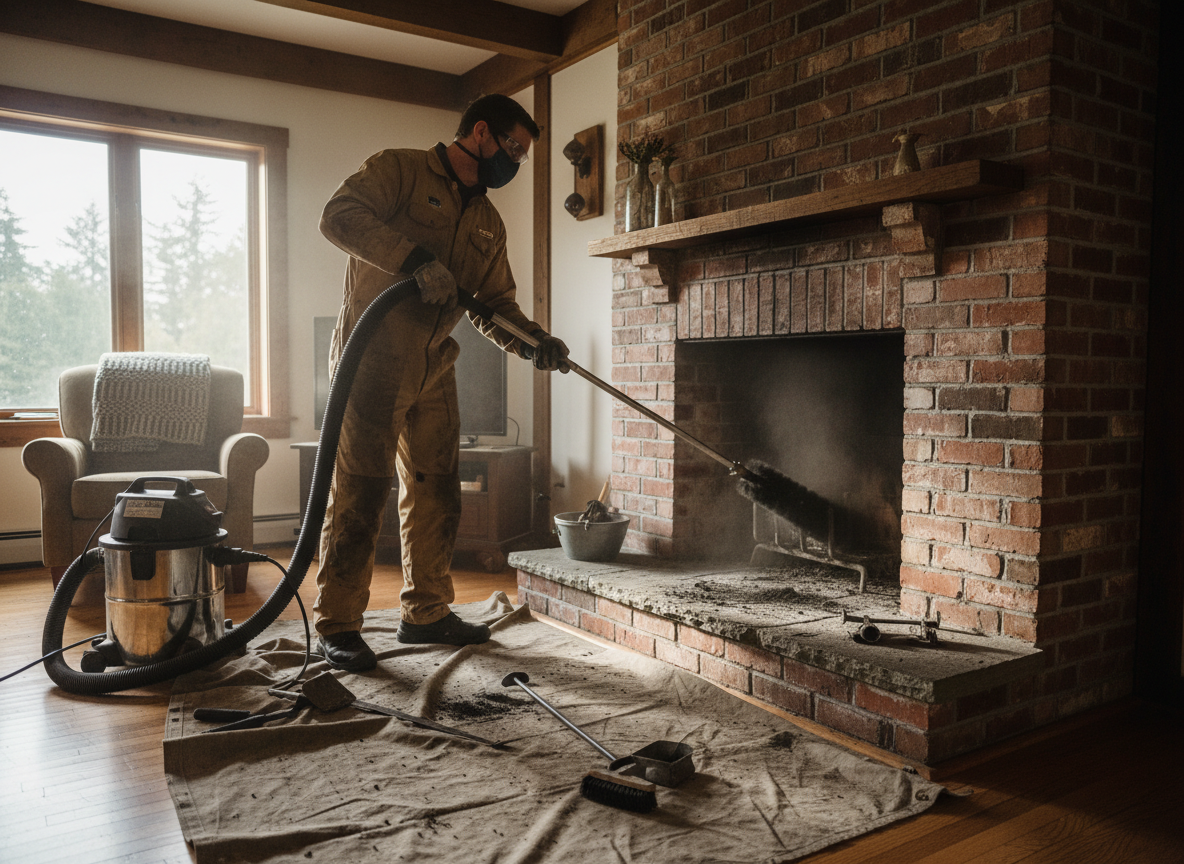
Soot from residential fires in Seahurst often settles into the textured plaster and lath walls common in homes built before 1960 along Ambaum Boulevard and nearby streets. These older surfaces hold fine carbon particles that standard wiping spreads rather than removes, requiring HEPA vacuuming followed by chemical sponges that lift residue without abrading the finish. King County humidity after a winter fire can cause soot to bond with moisture on wood trim, turning it into a sticky film that demands solvent-based cleaners matched to the specific resin type.
Edge cases appear frequently when fires start in kitchens of split-level homes common near Seahurst Park. Soot travels upward through HVAC returns and settles inside ductwork lined with older fiberglass insulation; attempting to clean only visible surfaces leaves odors that return within weeks. Technicians must seal off registers, remove and clean or replace filters, and sometimes recommend lining replacement when the insulation has absorbed heavy deposits. Drywall in post-1970s additions absorbs soot differently and may require full removal if the paper facing is stained through.
Homeowners sometimes attempt DIY cleaning with household degreasers on concrete basement floors found in many Seahurst properties, but these products leave behind a residue that attracts new dust and masks remaining smoke odor. Proper procedure includes pH-neutral rinses after initial extraction and testing small areas for colorfastness on carpet and upholstery before full treatment. All work follows Washington state guidelines for particulate containment to prevent cross-contamination between living spaces.
Technician insight
In Seahurst the thing that catches most people out with soot removal is how the frequent rain keeps basements damp, letting soot bind to concrete floors in homes off 152nd that never fully dries before we arrive, so standard dry methods fail and we have to switch to wet extraction right away.
Kitchen fire soot in a 1950s Seahurst split-level
Smoke from a stove fire traveled through return ducts into the upstairs bedrooms. We found heavy soot inside the plaster walls and settled into the carpet padding. After containing the space we removed the padding, cleaned the ducts, and treated the plaster with sponges. The homeowners were able to stay in the lower level during the three-day process.
How it works
- 1
Initial Assessment
Technicians arrive from the Seahurst base, document visible soot patterns, and identify affected materials in the specific home construction.
- 2
Containment Setup
Negative air machines and plastic barriers isolate rooms to keep particles from migrating into unaffected areas of the house.
- 3
Surface Cleaning
HEPA vacuums and chemical sponges remove loose and embedded soot from walls, ceilings, and trim without spreading residue.
- 4
HVAC and Detail Work
Duct interiors are cleaned, registers are removed and treated, and hidden pockets behind outlets or baseboards are addressed.
- 5
Final Verification
Air quality readings and surface inspections confirm soot levels meet clearance standards before barriers are taken down.
Pricing
Cost depends on square footage affected, depth of soot into older building materials, and whether HVAC cleaning is required.