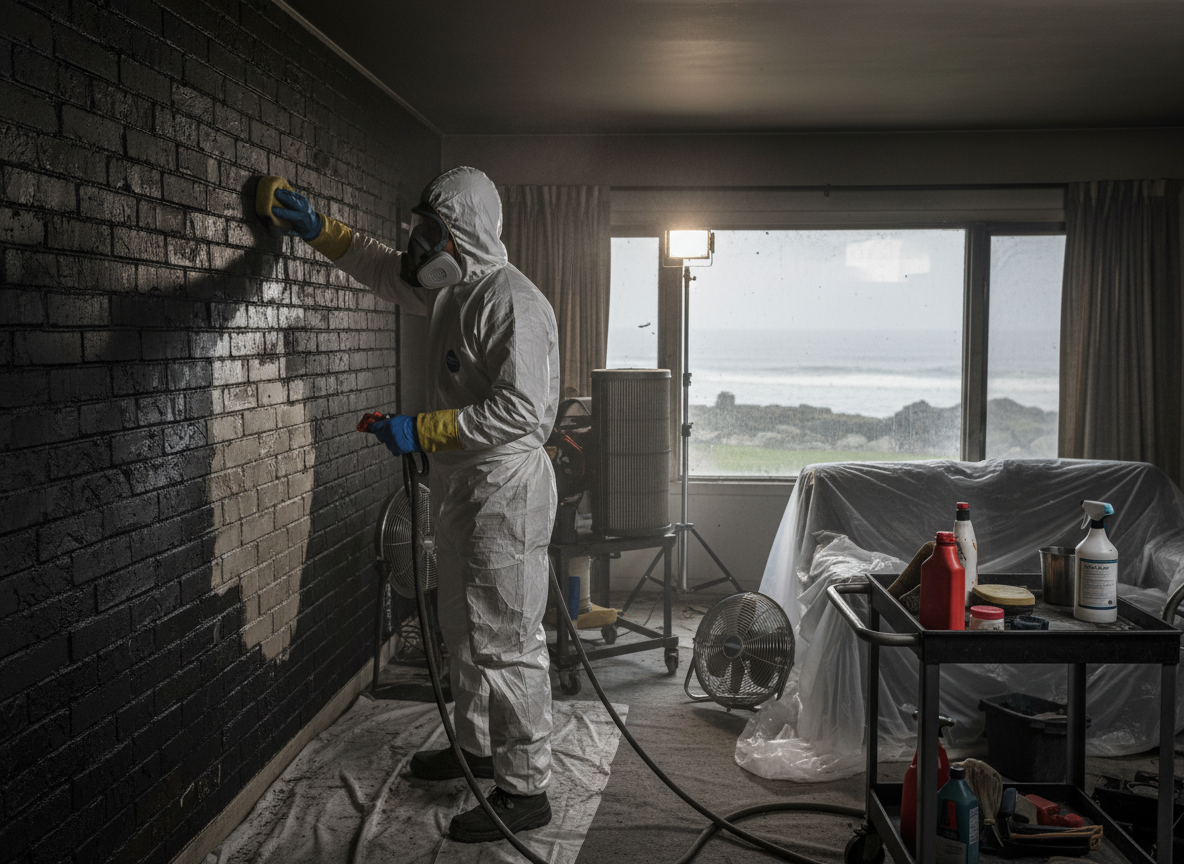
Smoke from structure fires in Seahurst often travels through HVAC ducts and settles into the lath-and-plaster walls common in homes built before 1960 along the Ambaum corridor. Porous materials such as cedar trim and older carpet padding hold acidic residues that continue to off-gas long after the flames are out. Technicians must map airflow paths created by the area’s prevailing westerly winds and address both visible soot and invisible particulates lodged in insulation.
King County building practices require that any restoration work affecting load-bearing elements after a fire be documented for permit review. In Seahurst, moisture from Puget Sound frequently combines with smoke to create a sticky film on metal ductwork and electrical boxes, raising the risk of corrosion if not neutralized within the first 48 hours. Specialized pH-neutral cleaners and air scrubbers with HEPA filtration are run continuously until readings return to pre-loss levels.
Contents cleaning for Seahurst residents includes ultrasonic treatment of small items and ozone or hydroxyl processing for larger upholstered pieces that cannot leave the home. Because many properties sit on sloped lots near the bluff, technicians stage equipment on the street and run temporary power lines to avoid tripping GFCI breakers common in older service panels.
Seasonal Considerations
Fall and winter house fires in Seahurst produce denser smoke because closed windows trap particulates; spring restoration jobs often require extra dehumidification to prevent secondary mold growth on previously wetted drywall.
Technician insight
In Seahurst, the thing that catches most people out with smoke damage restoration is how the constant marine humidity keeps soot bonded to the original plaster and fir flooring in homes built on the slope west of Ambaum Blvd.
Seahurst Split-Level After Kitchen Fire
Smoke from a stovetop flare-up traveled through the return-air duct into the lower-level family room of a 1958 split-level. We found acidic residue inside the metal duct seams and embedded in the original carpet pad. Containment was set at the stairwell, ducts were cleaned, and hydroxyl treatment ran for three days until odor readings matched unaffected rooms.
How it works
- 1
Initial Assessment
Technicians document smoke migration patterns through the home’s layout and test surfaces for pH levels and odor retention.
- 2
Containment and Ventilation
Plastic barriers and negative-air machines isolate affected rooms while preventing smoke particles from spreading to unaffected areas.
- 3
Soot Removal
Dry and wet cleaning methods are applied to walls, ceilings, and contents using appropriate solvents for each surface type.
- 4
Odor Neutralization
Thermal fogging or hydroxyl generators break down odor molecules trapped in porous materials and HVAC systems.
- 5
Final Clearance
Air quality testing and visual inspection confirm that residues are removed before any reconstruction begins.
Pricing
Pricing varies by the volume of affected space, depth of smoke penetration into porous materials, and whether HVAC cleaning is required.