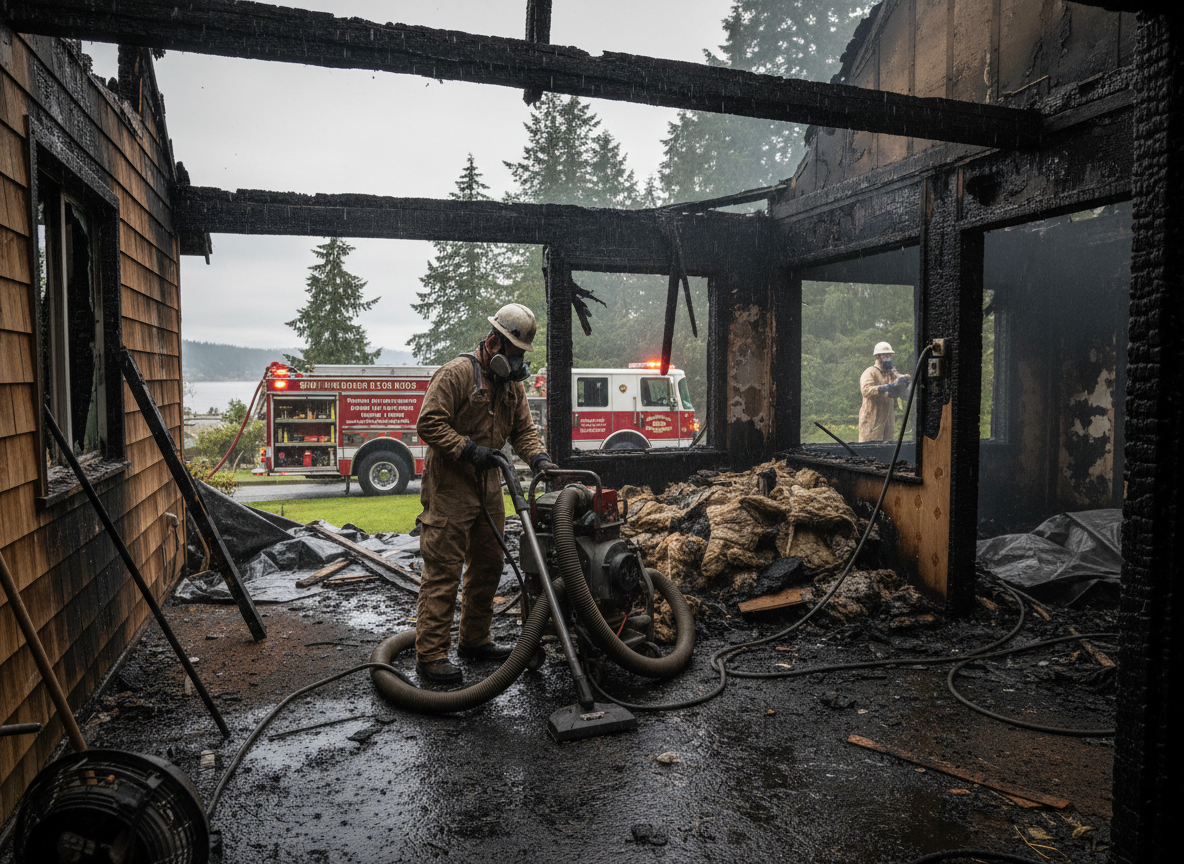
Seahurst homes built before the 1970s often feature cedar siding and shake roofs that trap smoke and soot deep into porous materials. When a fire starts in a kitchen or electrical panel, the marine layer and frequent rain keep humidity high, causing soot to bond to drywall and insulation faster than in drier climates. Technicians must remove affected layers rather than surface clean, or odors return when winter heating kicks on. Containment tarps and negative air machines are set up immediately to stop smoke migration through shared walls common in the older blocks near Ambaum Boulevard.
Electrical fires in these homes frequently travel through knob-and-tube wiring still present in some Seahurst properties. After power isolation, crews check attic spaces and crawl spaces where embers can hide in insulation. Water used by firefighters can pool against the clay-heavy soil here, leading to secondary mold if extraction is delayed. Every job requires documenting hidden char behind baseboards and in HVAC ducts before any reconstruction begins.
King County code requires permits for structural repairs exceeding certain square footage after fire damage. Crews coordinate with local inspectors on load-bearing wall replacements in single-story ranches typical of the area. Odor neutralization uses thermal fogging calibrated for the tight floor plans found along 152nd Street, followed by ozone treatment only after all porous materials are removed. Homeowners receive daily written updates on what was discovered behind walls that day.
Technician insight
In Seahurst, the thing that catches most people out with Emergency fire damage restoration is how the constant damp air lets smoke set into the old plaster and lath walls faster than anywhere else in King County. Homeowners try to clean it themselves with household products and just push the residue deeper into the texture.
Kitchen electrical fire on 4th Ave SW
A homeowner smelled burning plastic one evening and found flames behind the stove. By the time firefighters left, smoke had traveled through the open ceiling into two bedrooms. We removed the affected plaster, cleaned the ductwork, and replaced insulation before the next rain cycle could introduce moisture behind the new drywall.
How it works
- 1
Secure And Assess
Arrive on site, board up openings, and document all visible and hidden damage with photos and moisture readings.
- 2
Contain Smoke Migration
Set up physical barriers and air filtration to stop soot from spreading into unaffected rooms.
- 3
Remove Contaminated Materials
Cut out charred drywall, insulation, and flooring, then bag and dispose of debris following local landfill rules.
- 4
Clean And Neutralize
Apply specialized cleaners to remaining surfaces and treat for embedded smoke odor.
- 5
Restore And Verify
Replace removed materials, reinstall finishes, and run final clearance testing with the homeowner.
Pricing
Upfront written quotes after on-site inspection; final cost depends on square footage affected and hidden damage found during demolition.