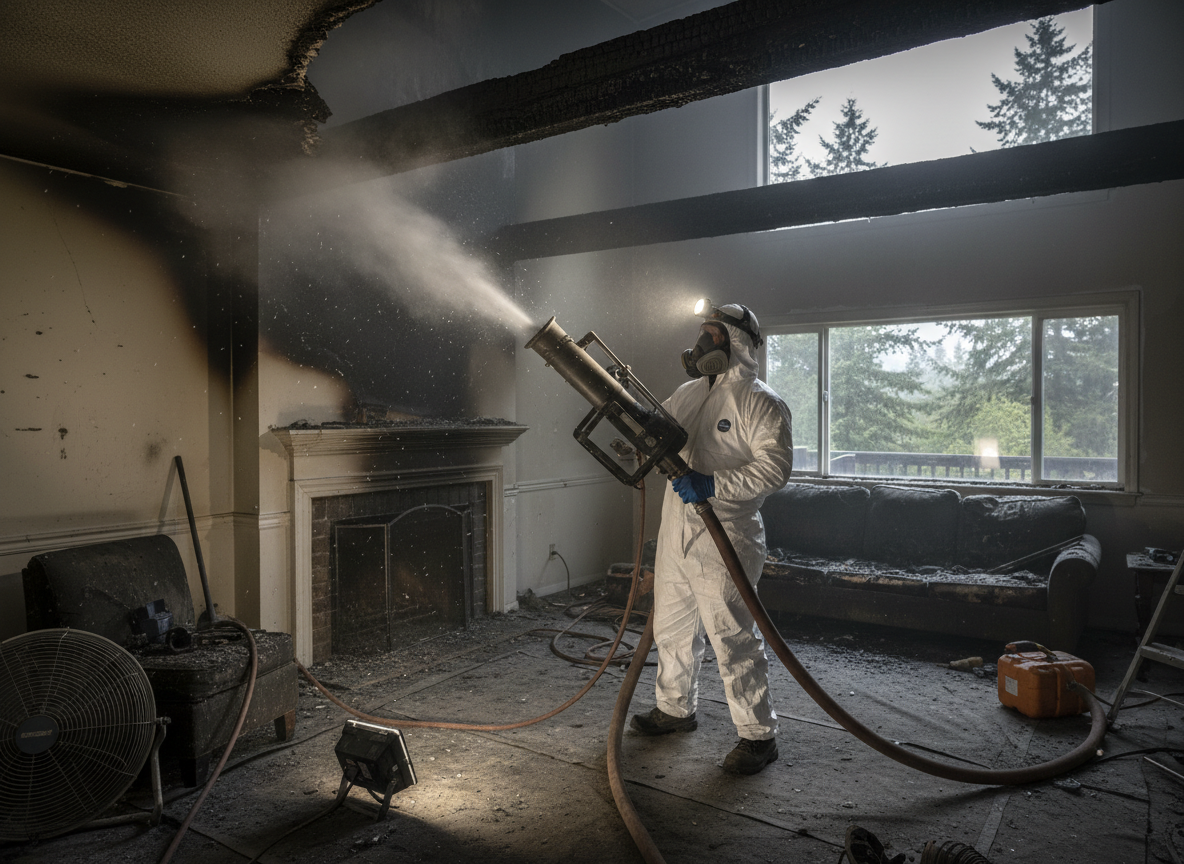
Smoke remediation in Seahurst homes often involves older single-story houses with plaster and lath walls that trap soot in porous surfaces. Technicians use HEPA vacuums and alkaline cleaners to lift residues without damaging original wood trim common in the area. Wet winters in King County can drive smoke deeper into insulation if windows stay closed during initial response.
Airflow patterns around Seahurst's hillside streets near Ambaum Boulevard affect how smoke travels through HVAC systems. Duct cleaning must address both supply and return runs to prevent re-circulation of particles into living spaces. Failure to isolate these paths leaves lingering smells in bedrooms even after visible soot is gone.
Residue on kitchen cabinets in local homes frequently requires solvent-based wipes followed by baking soda poultices to neutralize acidic deposits. Homeowners who attempt DIY cleaning with standard household products often set odors permanently into fabrics and drywall. Professional neutralization steps prevent this outcome in structures built before 1970.
Hidden Residue Risks
Porous materials like unsealed concrete in Seahurst basements hold smoke odors for months if not treated with specific encapsulants. Seasonal rain increases indoor humidity and reactivates smells that appeared gone during drier periods.
Odor Tracking After Initial Cleaning
Smoke particles travel along ceiling joists and settle in attics common to King County homes. Follow-up thermal fogging reaches these voids without demolition when performed after surface cleaning.
Technician insight
In Seahurst, the thing that catches most people out with smoke remediation is how rain and the area's older plaster walls let odors linger in wall cavities long after the fire is out. Homeowners often seal up the house during wet weather, which pushes smoke deeper into insulation instead of letting it vent.
Seahurst Smoke in Attic and Ducts
A kitchen fire sent smoke upward through ceiling registers into the attic of a 1960s Seahurst home. We found heavy soot on rafters and inside the main trunk line. After source removal and targeted fogging through the ducts, the odor cleared without opening walls.
How it works
- 1
Site Assessment
Inspect all affected rooms in the Seahurst property to map smoke migration through walls, ducts, and attics.
- 2
Source Removal
HEPA vacuum and wipe visible soot from hard surfaces while protecting undamaged finishes typical of local housing stock.
- 3
Odor Neutralization
Apply professional deodorizers and run air scrubbers to break down embedded smoke molecules in porous materials.
- 4
Final Clearance
Test air quality and surfaces before returning the home to normal use, confirming no re-emergence of odors.
Pricing
Cost depends on square footage affected, depth of smoke penetration into insulation, and whether HVAC systems require cleaning.