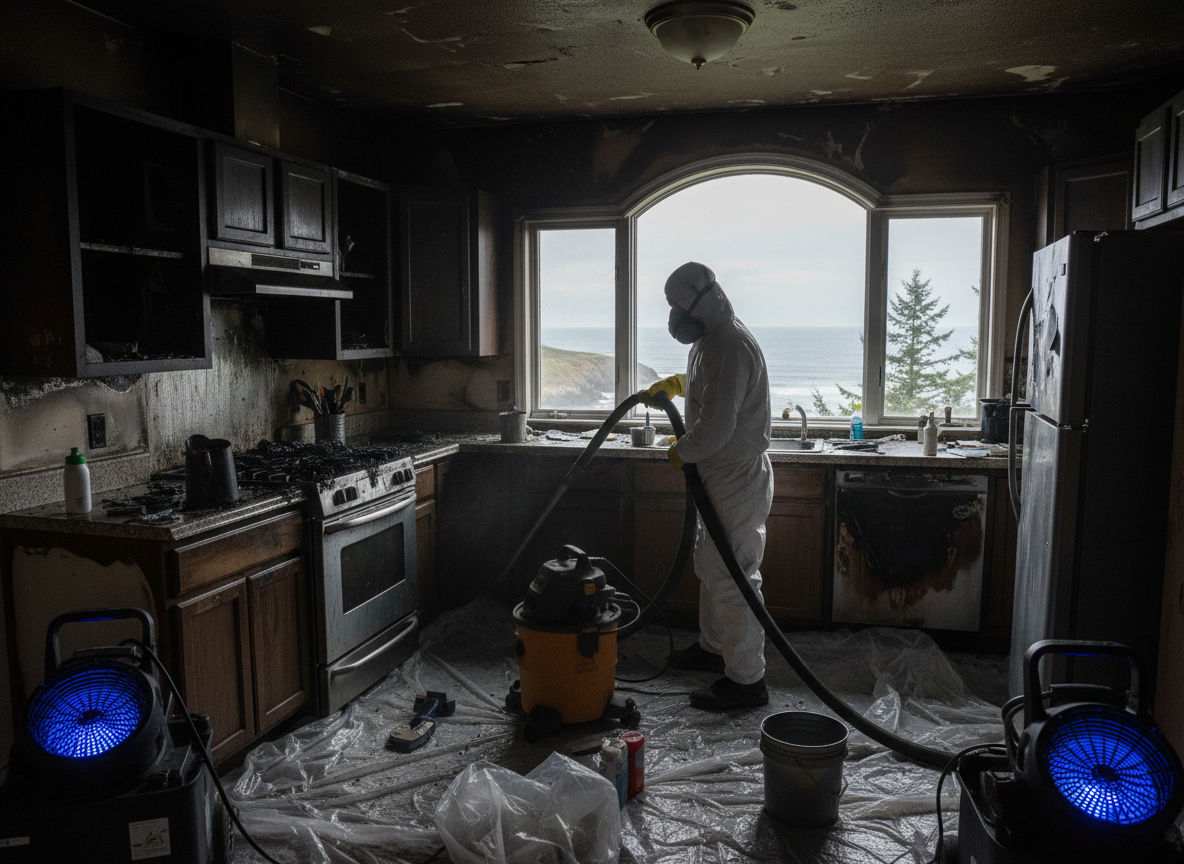
Kitchen fires in Seahurst homes often start from grease buildup on older ranges or faulty wiring common in mid-century houses near Ambaum Boulevard. Soot travels quickly through single-story ramblers and crawlspaces typical here, settling into cabinets, HVAC returns, and attic insulation. Technicians must map smoke paths room by room because Pacific Northwest moisture can turn dry soot into acidic residue that etches stainless steel and discolors laminate within days.
Restoration crews address both visible char and hidden contamination by removing affected drywall sections, cleaning ductwork, and treating porous materials with specialized agents that neutralize odors without masking them. In Seahurst’s damp climate, rapid drying prevents secondary mold growth behind cabinets or under flooring. Every job includes documentation of pre-existing wear so homeowners see exactly what the fire altered versus normal aging in these 1950s-1970s builds.
Code considerations matter because many Seahurst kitchens still use original aluminum wiring or ungrounded circuits. Technicians flag any exposed connections for licensed electricians before final clearance. Odor removal often requires hydroxyl generators or ozone units run for multiple days, followed by air scrubbing to meet post-clean air quality checks before residents return.
Technician insight
In Seahurst, the thing that catches most people out with kitchen fire cleanup is how quickly smoke travels through the uninsulated crawlspaces under 1960s ramblers along Ambaum. One small grease fire can coat every duct run and leave acidic residue that eats at older aluminum wiring if we don’t address moisture within the first 48 hours.
Range-top grease fire in Seahurst rambler
A cooking fire spread soot through the kitchen and into the return ducts of a 1962 single-story home near 152nd. Crews found heavy residue in the crawlspace insulation and on aluminum wiring runs. They removed affected materials, cleaned the entire HVAC system, and ran odor equipment for three days until clearance levels were reached.
How it works
- 1
Initial Assessment And Safety
Technicians arrive within hours, secure the site, and test for structural integrity plus hidden hot spots in Seahurst homes.
- 2
Soot And Debris Removal
Loose soot is vacuumed with HEPA equipment; charred cabinetry and counter materials are removed to prevent cross-contamination.
- 3
Deep Cleaning And Odor Treatment
Walls, ducts, and contents receive targeted cleaning; odor-neutralizing equipment runs until readings meet clearance standards.
- 4
Restoration And Final Walkthrough
Repairs and replacements are completed, followed by a full walkthrough with the homeowner to confirm every affected area.
Pricing
Project pricing varies with fire size, affected square footage, and whether contents cleaning is required; upfront written estimates provided before work begins.