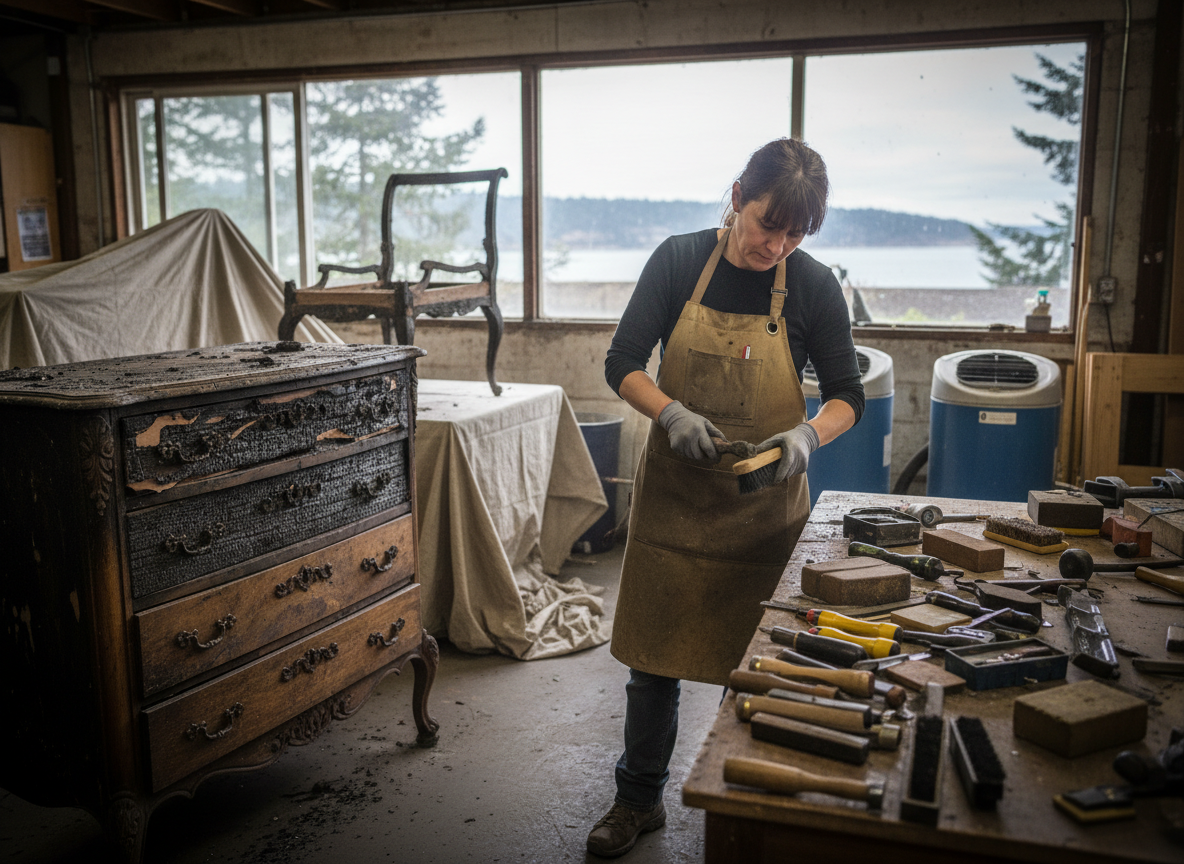
Fire-damaged furniture restoration begins with identifying the smoke type and how it penetrated each material. In Seahurst homes built before 1970, oak and maple pieces often hold acidic soot deep in the grain while upholstery layers trap oily residues that re-emit odors when humidity rises. Technicians test pH levels on wood surfaces and use specialized sponges before any refinishing to avoid raising the grain or leaving streaks that appear weeks later.
Edge cases appear when smoke travels through HVAC returns and settles inside dresser drawers or behind sofa frames. These hidden deposits require disassembly and HEPA vacuuming of every joint. Local code in King County requires disposal of any piece that cannot be fully cleaned to non-detectable odor levels, so restorers document each step with photos to protect homeowners from insurance disputes over total loss versus salvage.
Leather and vinyl pieces demand different solvents than fabric because heat from the fire can cause plasticizers to migrate to the surface, creating sticky films. Restoration includes multiple passes with neutral cleaners followed by conditioners matched to the original finish. Work is performed at the shop on Ambaum Boulevard so temperature and airflow stay controlled during the multi-day drying cycles that prevent mold in our wet winters.
Technician insight
In Seahurst, the thing that catches most people out with fire-damaged furniture restoration is how the damp winters let smoke stay bonded inside older maple and oak pieces from the 1950s and 60s homes around Ambaum. Homeowners often try wiping surfaces themselves and push the soot deeper into the grain, which forces us to sand more aggressively later.
Soot-Damaged Dining Set Near Seahurst
A kitchen fire sent smoke through a 1960s Seahurst rambler and into an oak table and chairs. Inspection showed acidic residue inside the table pedestal and chair joints. The set was disassembled, cleaned with pH-balanced sponges, treated for odor, and reassembled after refinishing the tops. The homeowner kept the original pieces instead of replacing them.
How it works
- 1
On-Site Assessment
Technicians inventory every piece, note material types, and test smoke penetration depth before moving items.
- 2
Pre-Cleaning and Transport
Loose soot is removed with specialized vacuums and the furniture is wrapped for safe transport to the Seahurst shop.
- 3
Material-Specific Cleaning
Wood receives pH-balanced sponges, upholstery gets solvent extraction, and leather is treated with matched conditioners.
- 4
Odor Neutralization and Repair
Ozone or hydroxyl treatment removes embedded smells, followed by structural repairs and refinishing where needed.
- 5
Final Inspection and Return
Each item is checked under different lighting and returned to the homeowner with a written report of work performed.
Pricing
Pricing varies by number of pieces, material types, and smoke severity; quotes are provided after inspection.