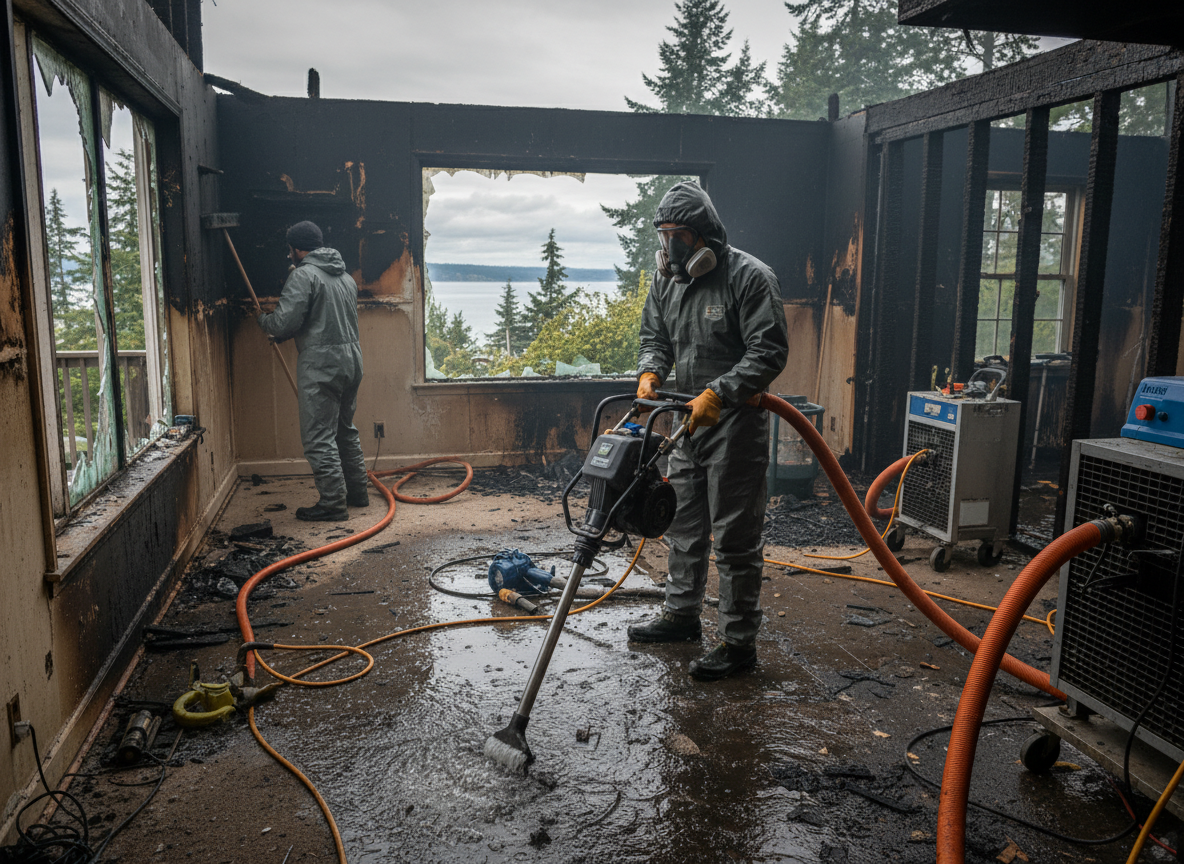
Fire and flood restoration in Seahurst often involves older single-family homes built before 1970 where drywall, plaster and lath construction trap soot deep into cavities. When rain follows a fire, water migrates through roof penetrations and compromised siding, carrying ash into insulation and subfloors. Technicians must separate charred materials from water-saturated ones quickly because residual moisture in King County’s cool, damp air accelerates corrosion on copper wiring and HVAC components.
Edge cases include properties near the bluff along Ambaum Boulevard where slope drainage can push floodwater back into crawl spaces already contaminated by smoke particulates. Containment barriers must account for multi-story layouts common in Seahurst so negative air pressure does not pull soot into unaffected bedrooms. Post-fire cleaning requires HEPA filtration rated for fine particulates; standard shop vacuums simply redistribute residue onto remaining surfaces.
Code considerations in unincorporated King County areas around Seahurst require permits when structural members are compromised, and electrical panels damaged by both fire and water must be replaced rather than repaired. Homeowners frequently discover hidden damage weeks later when baseboards are removed and water-stained joists appear. Early documentation of every layer removed protects against insurance disputes over pre-existing versus new damage.
Technician insight
In Seahurst the thing that catches most people out with fire and flood restoration is how quickly rainwater enters through a fire-damaged roof on homes along the bluff. Older crawl spaces with dirt floors turn into mud pits that carry ash under the entire house, and once that happens you cannot dry the structure without pulling the subfloor.
Bluff Home After Kitchen Fire
A kitchen fire in a 1960s Seahurst house spread smoke through the main floor. Rain entered through a melted vent the next day and soaked the crawl space. Crews extracted water, removed saturated insulation, and dried the joists before mold set in. The home was returned to occupancy after three weeks of drying and selective reconstruction.
How it works
- 1
Initial Assessment
Technicians arrive within hours, document visible fire and water damage, and test moisture levels in walls and floors at the Seahurst address.
- 2
Containment and Safety
Plastic barriers and negative air machines isolate affected zones while removing standing water and loose soot to prevent cross-contamination.
- 3
Drying and Cleaning
Industrial dehumidifiers and air movers run until readings drop below 12 percent, followed by HEPA vacuuming and surface cleaning of salvageable materials.
- 4
Restoration and Verification
Damaged drywall, insulation and flooring are replaced, then final clearance testing confirms the structure meets pre-loss conditions before reassembly.
Pricing
Upfront quotes provided after inspection; final cost depends on square footage affected and whether structural members require replacement.