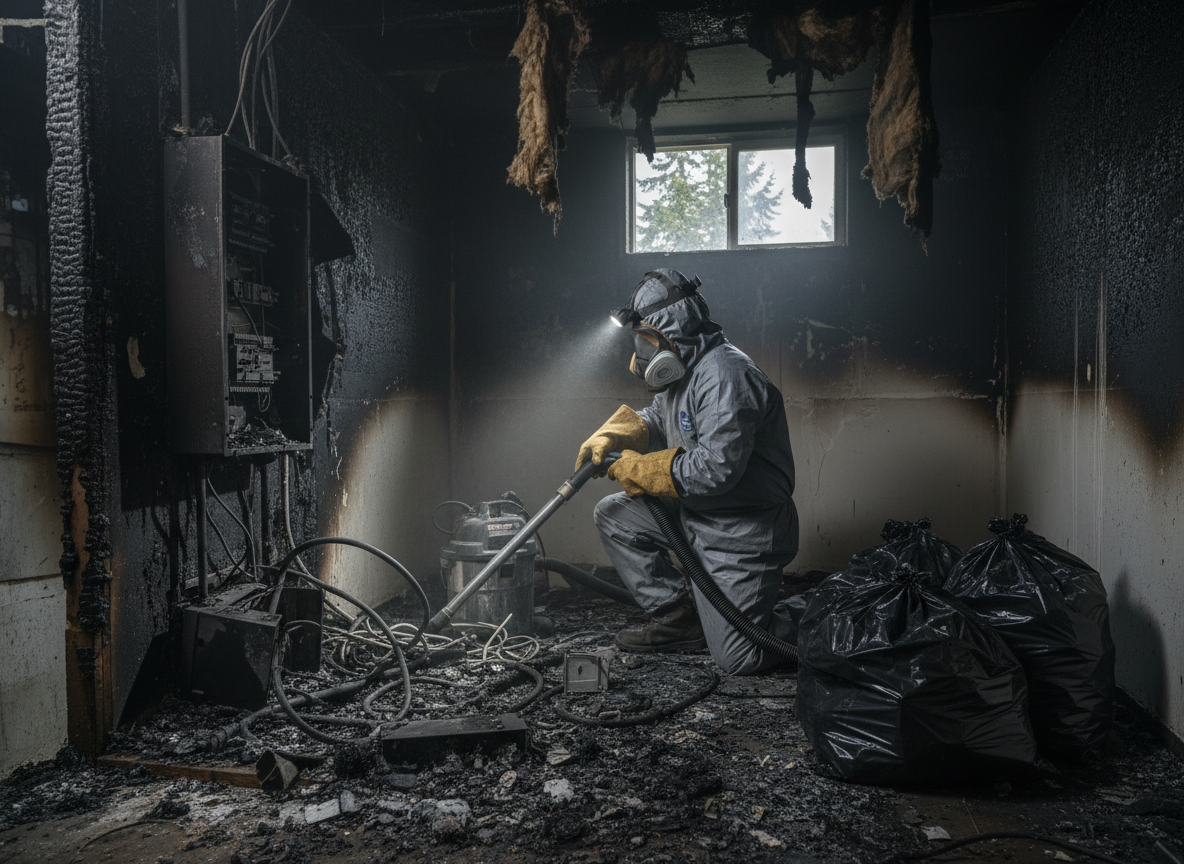
Electrical fires in Seahurst often start in outdated aluminum wiring or overloaded panels common in homes built before 1980 along the slopes off Ambaum Blvd SW. Cleanup begins with isolating affected circuits to prevent re-ignition, then removing charred insulation and carbon deposits that can travel through HVAC ducts in these single-story ranch styles. Technicians must test for arc faults that standard smoke detectors miss, especially where rainwater seepage from the area's frequent winter storms has already compromised junction boxes in crawl spaces.
Soot from electrical fires carries acidic residues that corrode copper and aluminum conductors faster in Seahurst's marine climate than in drier regions. We map every outlet and switch on the affected circuit, then use HEPA vacuums and corrosion inhibitors on remaining surfaces before any drywall replacement. Edge cases include fires that travel along knob-and-tube runs still present in some pre-1960 homes near Seahurst Park, requiring removal of entire runs rather than spot cleaning to meet current King County permitting standards.
Homeowners frequently overlook melted receptacle faces behind furniture, which can leave live conductors exposed once contents are moved. Our process includes thermal imaging of every wall cavity connected to the origin point and documentation for insurance that notes any shared walls with neighboring properties typical in Seahurst's denser residential blocks. This prevents callbacks when spring rains raise humidity and reactivate hidden corrosion months later.
Technician insight
In Seahurst, the thing that catches most people out with Electrical fire cleanup is moisture trapped under older homes on the Ambaum slope; our frequent rains turn leftover soot acidic and it eats through remaining neutral wires inside the walls weeks after the fire is out.
Overloaded Panel in 1972 Ranch
A homeowner in Seahurst discovered melted outlets after an electrical fire in the utility room. We found arc damage along a shared neutral that had traveled into the crawl space where rainwater had already rusted the subfloor joists. After isolating the circuit, neutralizing soot, and replacing the compromised wiring run, the home passed reinspection without further issues.
How it works
- 1
Safety Isolation
Shut off power at the main panel and verify zero energy on all affected circuits before entry.
- 2
Soot and Debris Removal
HEPA vacuum all surfaces and extract charred material from outlets, switches, and attic spaces.
- 3
Corrosion Treatment
Apply neutralizing agents to metal conductors and test for remaining acidity in humid crawl spaces.
- 4
Final Verification
Re-energize under load and document all repairs for King County inspection records.
Pricing
Cost depends on number of affected circuits and whether crawl space or attic access is required in older Seahurst homes.