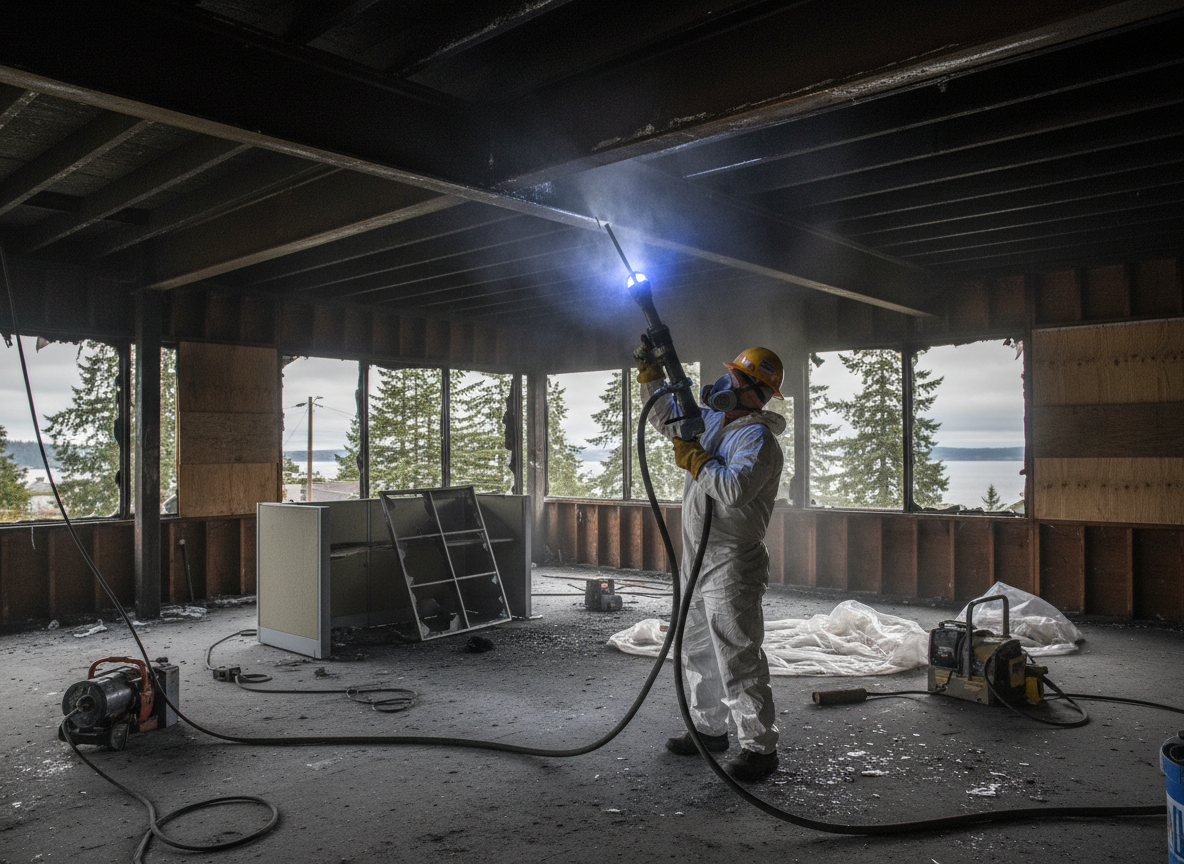
Commercial properties in Seahurst often sit in single-story strip buildings along Ambaum Boulevard with flat roofs and drop ceilings that trap smoke and soot in ways residential jobs rarely do. Once a fire starts in a restaurant kitchen or retail back room, the HVAC system can push particulates through the entire space within minutes, requiring full duct cleaning plus removal of acoustic tiles and insulation that absorb odors. King County code requires that any electrical or mechanical work after a fire pass inspection before occupancy is restored, so restoration crews must coordinate with the fire marshal on every commercial project.
Seahurst’s frequent winter rains mean that water used during suppression can linger in slab-on-grade floors and wall cavities for weeks if not extracted immediately, leading to secondary mold growth that delays reopening. Technicians routinely open base cabinets and lift sections of flooring in older commercial spaces built before 1980 to check for hidden moisture, because vinyl tile and particleboard subfloors common here hold water longer than newer materials. Documentation with moisture meters and photos is kept daily so insurance adjusters see exactly which areas were affected.
Business owners here face strict timelines from landlords and the city; a closed storefront on 1st Avenue South quickly affects neighboring tenants. Restoration plans therefore separate the affected suite from shared walls and corridors with temporary barriers rated for smoke and dust, allowing adjacent businesses to stay open. All debris is removed the same day it is generated to avoid attracting rodents that are active along the greenbelt edges near Seahurst Park.
Seasonal Considerations
Winter storms increase electrical fire risk in Seahurst commercial buildings with aging wiring, while summer dry spells raise the chance of exterior fires spreading from nearby vegetation into loading docks and storage areas.
Technician insight
In Seahurst the thing that catches most people out with Commercial fire restoration is how quickly smoke travels through the shared drop ceilings and utility chases in the older strip centers along Ambaum; if you don’t open those voids the first day the odor returns the minute the HVAC kicks on again.
Retail Suite on Ambaum Blvd
A small fire in the stockroom of a Seahurst retail store sent smoke through the drop ceiling into two neighboring suites. We isolated the HVAC, removed saturated ceiling tiles and insulation, extracted water from the slab, and ran odor treatment for five days. The main tenant reopened in nine days after passing the fire marshal inspection.
How it works
- 1
Site Assessment
Technicians arrive within hours, document the fire origin, smoke paths, and any water intrusion while checking structural integrity of the commercial space.
- 2
Containment and Safety
Plastic barriers and negative air machines isolate the affected suite from shared corridors and HVAC systems to protect neighboring businesses.
- 3
Debris Removal and Cleaning
Charred materials and smoke-affected contents are removed, followed by HEPA vacuuming and chemical cleaning of all surfaces and ductwork.
- 4
Drying and Odor Control
Industrial dehumidifiers and air movers extract moisture from slabs and walls; ozone or hydroxyl generators address embedded smoke odors.
- 5
Rebuild and Final Inspection
Repairs follow King County permitting requirements, with final walkthrough and documentation provided for insurance and occupancy approval.
Pricing
Upfront written quotes based on square footage, materials affected, and required permits; no work begins without owner approval.