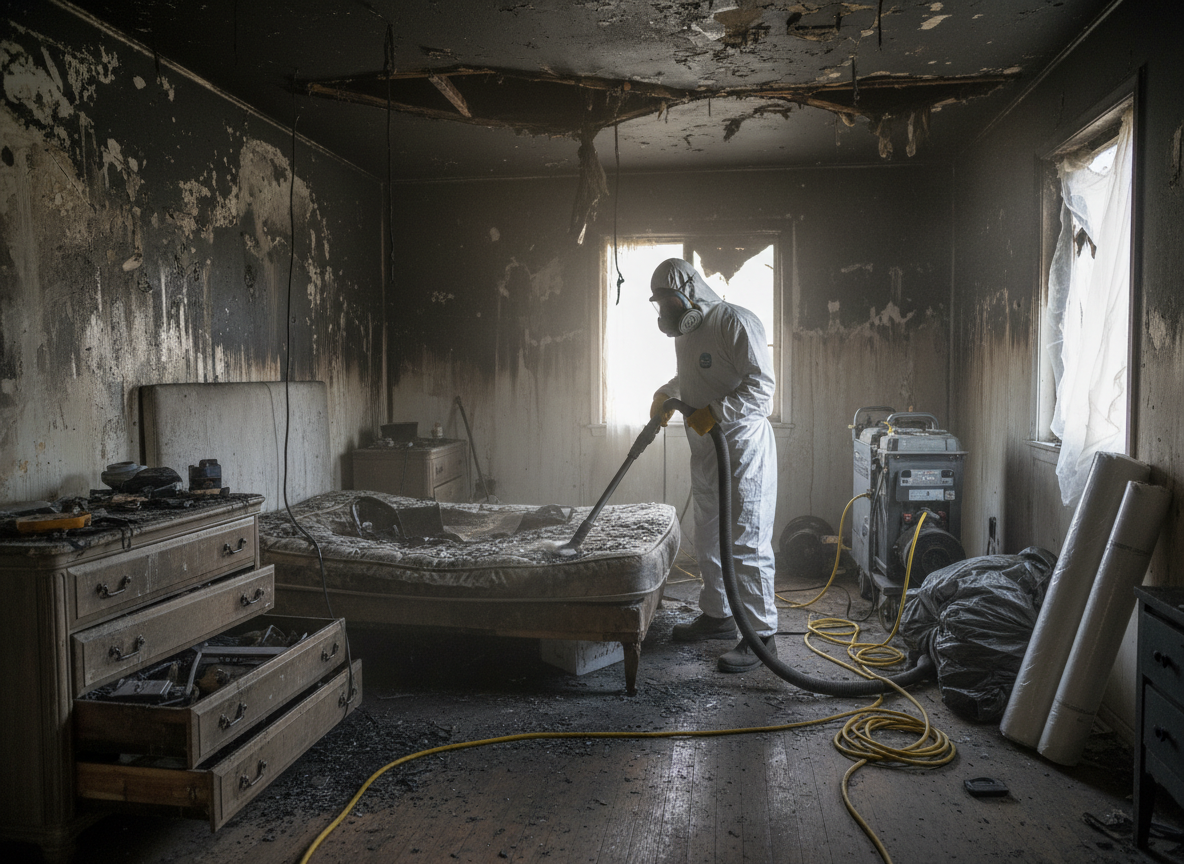
Bedroom fire damage cleanup starts with tracing how smoke moves through Seahurst homes, especially those along Ambaum Blvd SW where many single-story layouts allow soot to travel into closets and under flooring. Mattresses, curtains and carpet pads hold odors long after visible soot is gone, requiring removal rather than surface cleaning in most cases. Technicians check electrical outlets and HVAC returns because residual particles can re-circulate and trigger new issues weeks later.
Edge cases often involve older drywall that has absorbed acidic smoke, leading to hidden corrosion on metal fasteners and wiring. In Seahurst properties near the bluff, higher humidity can make soot bond more tightly to wood trim and baseboards, so standard wipes fail and require specialized emulsifiers. Homeowners sometimes attempt their own cleaning with household products that set the residue permanently, forcing full replacement of affected surfaces later.
Final steps include sealing porous materials that cannot be fully restored and running air scrubbers until readings return to normal. Every job ends with a walk-through so the homeowner can inspect cleared areas before any reconstruction begins.
Technician insight
In Seahurst, the thing that catches most people out with Bedroom fire damage cleanup is how smoke settles into the carpet pad and subfloor of older homes near Ambaum Blvd SW; once humidity hits, the odor returns unless the pad is pulled and the concrete or wood is treated.
Electrical Fire Smoke in Seahurst Bedroom
A small electrical fire in a bedside lamp spread soot through a bedroom in a Seahurst home. We found residue inside the closet drywall and under the carpet pad. Containment, pad removal, wall cleaning and odor treatment cleared the space. The homeowner could reoccupy without lingering smells.
How it works
- 1
Site Assessment
Technicians inspect all bedroom surfaces, fabrics and cavities for smoke migration and note any electrical or insulation concerns.
- 2
Containment Setup
Plastic barriers and negative air machines isolate the bedroom to prevent soot from spreading to unaffected rooms.
- 3
Residue Removal
HEPA vacuuming, emulsifying agents and controlled demolition remove soot from walls, floors and contents.
- 4
Odor Neutralization
Thermal fogging and ozone treatment address embedded smells in carpet pads, mattresses and drywall.
- 5
Clearance Testing
Air quality readings and visual checks confirm the space meets restoration standards before re-entry.
Pricing
Pricing varies by damage extent, materials affected and square footage; we provide detailed upfront estimates after inspection.