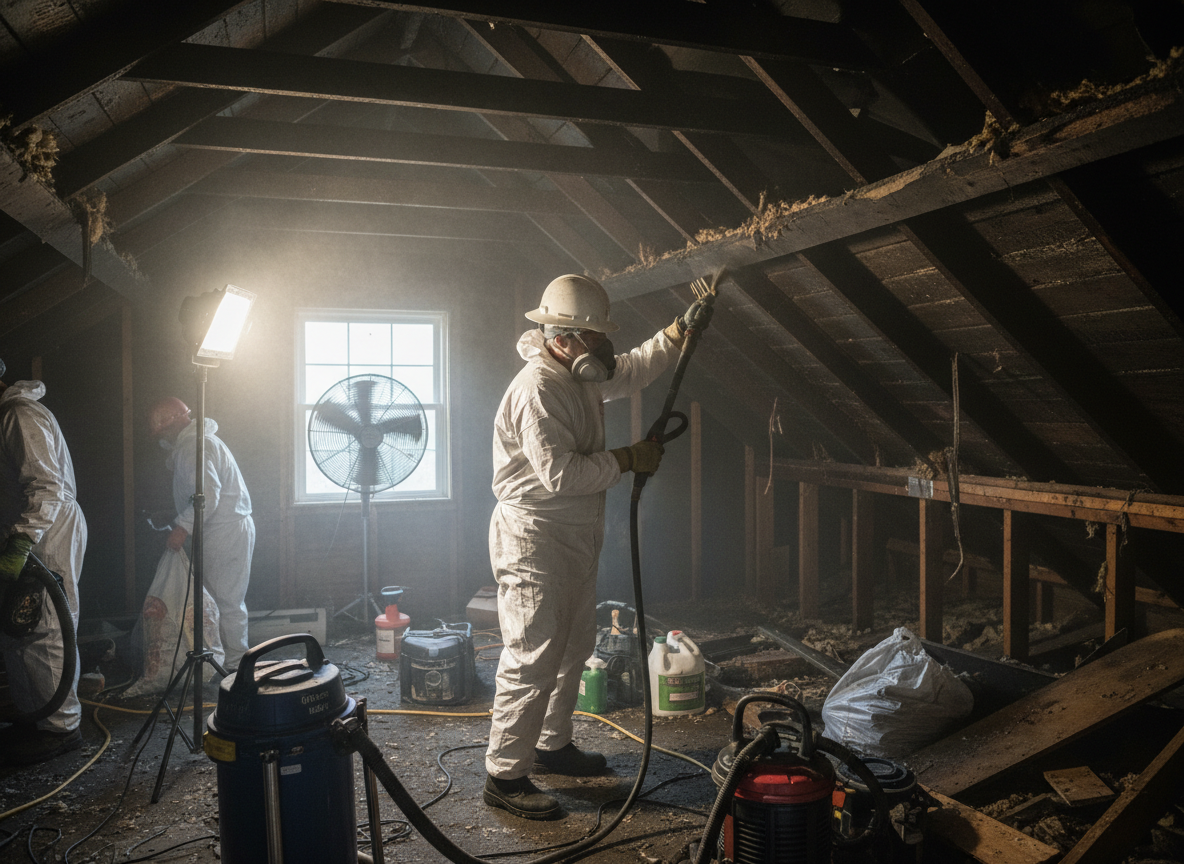
Attic fires in Seahurst often start from electrical faults in older wiring common to homes built before 1970 along Ambaum Boulevard and nearby streets. Soot travels upward through roof vents and settles deep into fiberglass batts and blown-in cellulose, requiring full removal rather than surface cleaning to prevent odors from returning during wet winter months. Crews must also check for charring along roof decking where cedar shake roofs meet newer asphalt layers, as partial replacement can leave weak points that fail during heavy rain.
King County code requires permits for any structural work exposed after an attic fire, and inspectors frequently flag missing firestops between attics and living spaces in mid-century Seahurst houses. Restoration includes sealing penetrations with fire-rated caulk and replacing HVAC ducts that run through the space, since smoke residue inside flex duct cannot be cleaned to safe levels. Homeowners often overlook the need to test for asbestos in vermiculite insulation still present in many local attics, which changes the containment and disposal process.
Moisture from fire-suppression water combines with soot to create acidic conditions that corrode metal truss plates and electrical boxes over weeks if not dried within 48 hours. Technicians use moisture meters on ceiling joists and remove sections of drywall from below when hidden water has wicked into top plates. This prevents mold growth that frequently appears months later in the damp Puget Sound climate.
Technician insight
In Seahurst the thing that catches most people out with attic fire restoration is the knob-and-tube wiring still running through many attics along older streets off Ambaum; once insulation is removed the exposed wires often fail inspection and force an electrical upgrade that changes the whole timeline.
Hidden Wiring Damage After Attic Fire
A Seahurst homeowner noticed a burning smell after a small electrical fire in the attic. Inspection revealed charred knob-and-tube wiring running through cellulose insulation that had absorbed water from suppression efforts. Crews removed all affected insulation, replaced the wiring section, dried the joists, and installed new fire-rated insulation before closing the ceiling.
How it works
- 1
Initial Assessment and Safety
Technicians enter the attic from the address at 15201 Ambaum Blvd SW to map fire paths, test for structural compromise, and identify asbestos or lead risks before any cleaning begins.
- 2
Containment and Debris Removal
Plastic sheeting isolates the attic from living areas while charred insulation, wiring fragments, and debris are bagged and removed to prevent cross-contamination downstairs.
- 3
Soot and Odor Treatment
HEPA vacuums and specialized sponges clean rafters and sheathing, followed by application of odor-sealing primers that lock in smoke residues common after attic fires.
- 4
Insulation Replacement and Drying
New insulation meeting current energy codes is installed after drying the space with air movers, and HVAC components are inspected or replaced to restore safe airflow.
Pricing
Pricing varies with attic size, extent of hidden damage, and whether structural or HVAC work is required; upfront quotes provided after inspection.