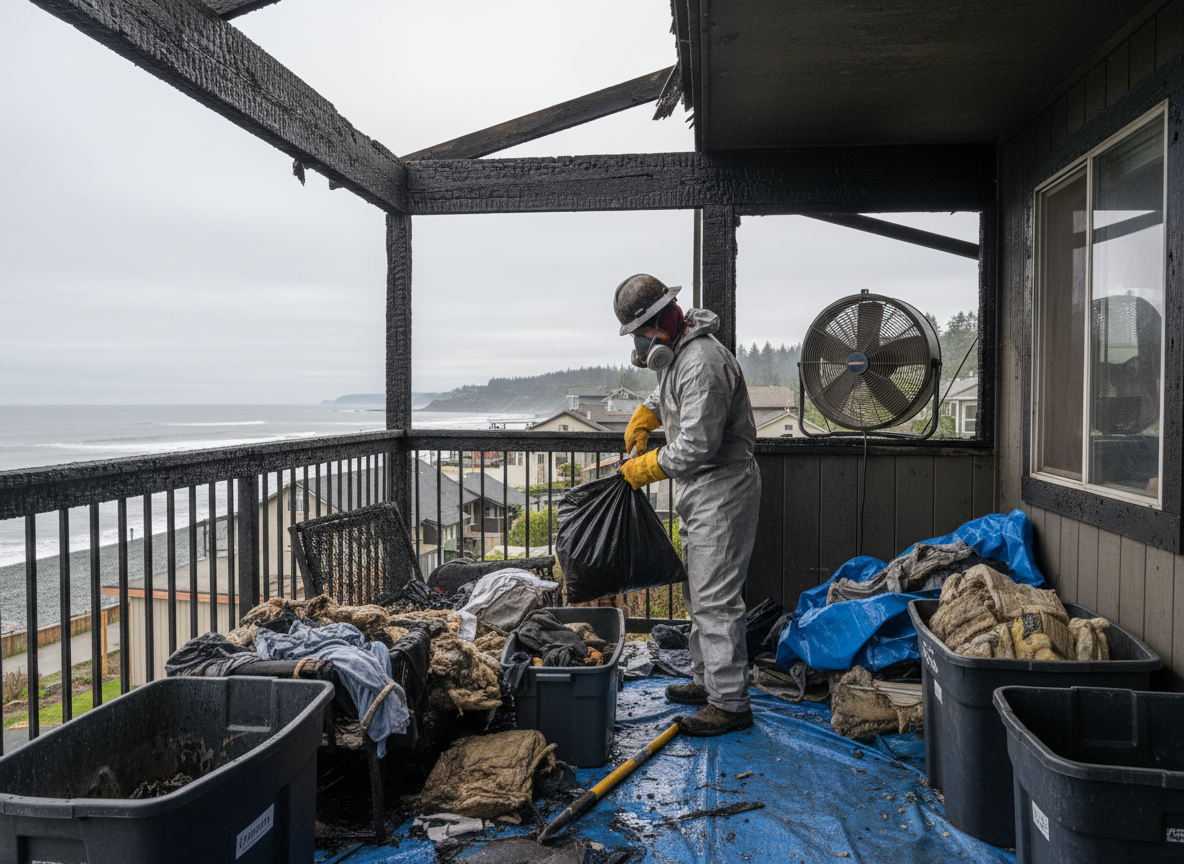
Apartment fires in Seahurst often involve older multi-unit buildings along Ambaum Boulevard where shared walls and HVAC systems allow smoke to travel quickly between units. Residue from burning synthetics and insulation settles into carpet fibers, drywall, and electrical outlets, requiring HEPA vacuuming and chemical neutralization rather than simple wiping. Crews must coordinate with property managers to isolate affected units while keeping neighboring residents in place, which changes access timing and containment methods compared to single-family homes.
King County building codes require documentation of all removed materials after a fire, especially when insulation or wiring is involved. In Seahurst apartments built before 1980, crews frequently encounter lead-based paint and older electrical systems that complicate disposal and increase the need for negative-air machines to prevent cross-contamination into hallways. Weather patterns with frequent marine air bring higher humidity, which can set smoke odors into porous surfaces faster if drying and odor removal are delayed.
Edge cases include fires that start in one unit but affect the common laundry room or stairwells, requiring corridor cleaning and air scrubbing that extends beyond the original fire room. Technicians test surfaces with chemical swabs to confirm residue removal before any repainting or reinstallation, because missed soot can reactivate odors when heat returns. All work follows written scopes reviewed with the property owner to avoid disputes over what constitutes complete cleanup versus cosmetic repair.
Handling Shared Systems in Seahurst Apartments
Multi-unit HVAC and plumbing stacks in Seahurst buildings require separate sealing and cleaning steps so smoke does not re-enter cleaned units through shared ducts. Crews map each chase and vent before starting, then use portable scrubbers sized for the floor plate rather than whole-building systems.
Technician insight
In Seahurst the thing that catches most people out with Apartment fire cleanup is how fast marine-layer humidity sets smoke into the older drywall and carpet padding in buildings near Ambaum Blvd SW. Once that happens you cannot just wipe surfaces; the odor returns the first time the heat kicks on. We always pull baseboards and check behind outlets on the first visit because shared walls let residue travel two or three units away.
Second-floor unit fire with hallway migration
A cooking fire in a Seahurst apartment spread smoke through the hallway and into two neighboring units via the shared return air duct. We isolated the three affected spaces with zip walls, removed carpet pad and baseboards where residue had settled, and ran air scrubbers for 48 hours. After clearance testing the units passed odor checks and the property manager reopened the hallway the same week.
How it works
- 1
Initial Assessment and Containment
Technicians arrive from the Seahurst location, document visible damage, and set up containment barriers to stop soot migration into unaffected units.
- 2
Soot and Residue Removal
HEPA vacuuming and dry cleaning sponges remove loose particles from walls, ceilings, and contents before any wet cleaning begins.
- 3
Odor Neutralization and Air Scrubbing
Thermal fogging and hydroxyl generators treat embedded odors while negative air machines filter the unit and adjacent corridors.
- 4
Final Clearance and Documentation
Surface testing confirms residue removal, followed by a written report for the property manager and insurance adjuster.
Pricing
Pricing depends on square footage affected, number of units involved, and whether shared HVAC systems require cleaning; upfront quotes provided after inspection.