2026-10-17 ·
Preventing Secondary Mold Growth in Fire-Damaged Seahurst Properties During Spring
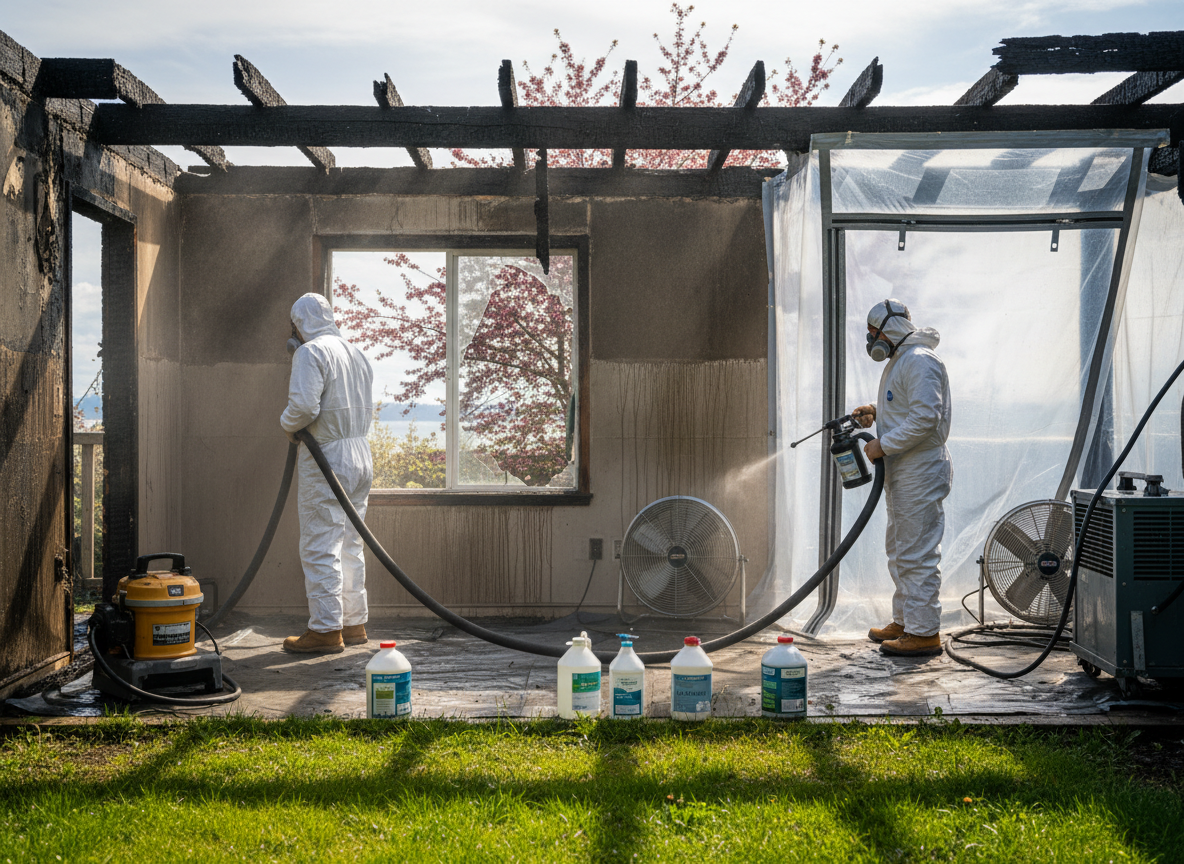
In Seahurst properties, preventing secondary mold growth after fire damage during spring requires removing all standing water and drying porous materials within 48 hours while keeping indoor humidity under 60 percent. Fire-suppression water left behind combines with the area's frequent March through May rainfall to create hidden moisture pockets in walls, attics, and crawl spaces common in local single-story homes built between 1950 and 1980. Homeowners in neighborhoods near Ambaum Boulevard often see mold colonies appear within 72 hours when these steps are skipped.
Spring Moisture Patterns in Seahurst
Seahurst receives 3 to 5 inches of rain most springs, with temperatures climbing from the low 50s into the mid-60s. This warming trend drives evaporation that pushes moisture into previously dry cavities created by fire. Older homes along Des Moines Memorial Drive often have uninsulated attics and crawl spaces where condensation forms on charred framing once outdoor humidity rises above 70 percent. Without extraction equipment running continuously for the first week, residual water from hoses can migrate into subflooring and insulation, turning a contained fire loss into a widespread mold issue by early summer.
Drying Protocols for Fire-Damaged Structures
Start by extracting all visible water with truck-mounted units, then place air movers and dehumidifiers on every affected level. In Seahurst homes, focus on the spaces between floor joists and behind baseboards where water pools after suppression. Run equipment until moisture readings on drywall and framing drop below 15 percent, which typically takes 5 to 7 days in local conditions. Replace saturated insulation immediately rather than attempting to dry it, as fiberglass and cellulose hold water long enough to support mold even after surface drying appears complete.
Monitoring and Follow-Up in Local Homes
Check relative humidity daily with a digital meter placed in the center of each room and in the attic. If readings climb above 55 percent during a rainy stretch, increase dehumidifier capacity or open windows on dry afternoons when outdoor air is drier. Properties near Burien and Normandy Park frequently need extra attention to electrical boxes and HVAC returns where soot and moisture combine. Fire and flood restoration crews familiar with King County conditions can place data loggers that track conditions for 14 days after initial drying.
When Insulation Replacement Becomes Necessary
Charred or waterlogged insulation must be removed to prevent hidden mold colonies from forming once spring rains resume. In Seahurst attics, this often means pulling 8 to 12 inches of blown-in material and inspecting sheathing for hidden char. Local cost factors for replacing insulation after fire damage in Seahurst Washington outlines typical material quantities for 1,200-square-foot homes common here. After replacement, seal all penetrations to limit future moisture entry from the frequent fog and drizzle that arrives each spring.
Ongoing Protection for Seahurst Properties
Schedule a follow-up inspection two weeks after equipment removal to confirm no new moisture has entered through roof damage or compromised siding. Homes in the Seahurst area benefit from installing exhaust fans in bathrooms and kitchens that vent directly outside, reducing indoor humidity during the wet months. If any musty odor returns or drywall feels cool to the touch, contact a 24 hour fire restoration team at 15201 Ambaum Blvd SW for targeted moisture mapping before colonies spread.