2026-10-17 ·
How Rainy Seahurst Winters Affect Smoke Residue After a House Fire
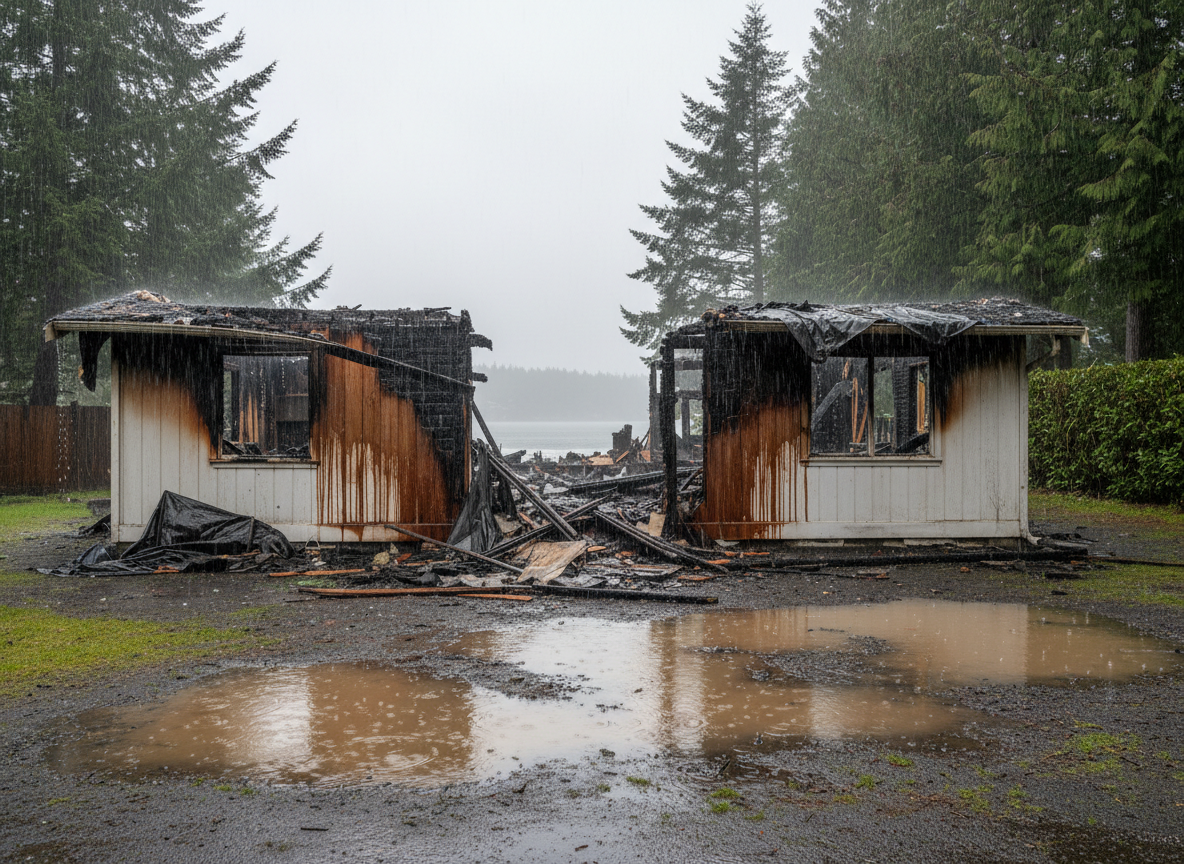
Rainy Seahurst winters make smoke residue more acidic and prone to bonding with surfaces because constant moisture from Pacific Northwest rainfall drives particles deeper into porous materials within days of a fire.
How Persistent Moisture Changes Residue Chemistry
Seahurst receives frequent winter rain that keeps relative humidity elevated for weeks, allowing alkaline and acidic soot compounds to react with water and form new corrosive compounds. These compounds etch glass, discolor painted drywall, and accelerate rust on metal HVAC components common in 1960s ramblers found along Ambaum Boulevard. Homeowners often notice yellow or brown staining that was not visible immediately after the fire because the residue had not yet absorbed enough ambient moisture. The same process affects insulation batts, where water vapor carries particulates inward and reduces R-value faster than in drier climates. Because Seahurst sits near the coast, salt-laden air mixes with the residue and heightens conductivity, increasing the chance of electrical tracking in outlets and switches.
Impact on Common Local Building Materials
Mid-century homes in Seahurst and nearby Burien neighborhoods typically feature cedar siding, plaster-over-lath walls, and forced-air ducts that trap residue differently than newer construction. When rain soaks exterior walls, smoke particles migrate inward through weep holes and settle on the back side of siding, creating hidden odor sources. Hardwood floors absorb moisture from above and below, causing residue to wick into the grain and produce uneven discoloration that sanding alone cannot remove. Brick fireplaces, prevalent in the area, hold soot in mortar joints; winter humidity then mobilizes salts that effloresce and spall the brick face over subsequent months. Attic spaces with minimal ventilation see condensation form on roof sheathing, carrying residue downward onto ceiling joists and creating long-term staining patterns.
Seasonal Timing and Secondary Risks
Fires that occur between November and February in Seahurst leave residue exposed to weeks of drizzle before spring drying begins, giving the material time to set into substrates. This extended contact period often requires more aggressive neutralization steps than fires handled in summer. The combination of fire residue and winter moisture also raises the risk of secondary mold growth on damp drywall and insulation, particularly in crawl spaces common under older Seahurst homes. Property owners who delay addressing residue until warmer months frequently face expanded damage zones where mold colonies have already formed around soot deposits.
Practical Restoration Considerations
Restoration teams address these conditions by first stabilizing humidity levels inside the structure using containment and dehumidification before any cleaning begins. Surfaces receive pH-specific rinses matched to the residue type rather than generic cleaners, because the winter moisture shift can change residue acidity within 48 hours. In cases where fire and water intrusion occur together, combined protocols prevent cross-contamination between smoke and flood-related contaminants. Readers facing these issues can review detailed approaches in smoke remediation and fire-and-flood restoration. Additional guidance on handling brick surfaces appears in the article What Seahurst Residents Should Know About Soot Removal From Brick Fireplaces, while insulation concerns are covered in Local Cost Factors for Replacing Insulation After Fire Damage in Seahurst Washington.
When Extended Exposure Requires Further Action
If residue has remained through multiple rain events, odor often reappears after initial cleaning because moisture has carried particles into subfloor cavities and wall cavities. At that stage, targeted removal of affected materials becomes necessary rather than surface treatment alone. Properties located near the 15201 Ambaum Blvd SW address can reach 24/7 response for assessment when winter conditions accelerate residue movement.